Product Overview
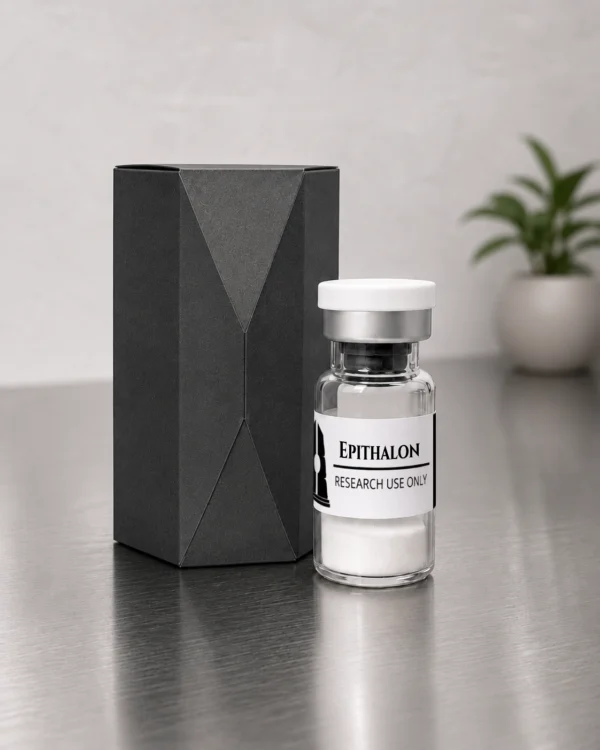
Epithalon, also called Epitalon or AEDG, is a synthetic tetrapeptide modeled from the pineal polypeptide complex Epithalamin. Its research profile centers on cellular aging and the mechanisms that influence how long cells retain replicative capacity.
The compound is most widely associated with telomerase activation and telomere-length research, but its scientific reach is broader. Investigators have also examined epigenetic gene regulation, antioxidant-enzyme activity, melatonin and circadian signaling, and age-related changes in cellular function.
For longevity-focused research, Epithalon provides a minimalist peptide model aimed directly at some of the most discussed mechanisms in aging biology: telomere maintenance, gene expression, and neuroendocrine timing.
Common Research Areas
⦁ Telomerase and telomere-length research
⦁ Cellular aging and replicative senescence
⦁ Epigenetic gene-expression models
⦁ Circadian and pineal signaling
⦁ Antioxidant defense pathways
Research References
- Khavinson VKh, Bondarev IE, Butyugov AA. “Epithalon peptide induces telomerase activity and telomere elongation in human somatic cells.” Bulletin of Experimental Biology and Medicine. 2003;135(6):590–592. DOI: 10.1023/A:1025493705728.
- Anisimov VN, Khavinson VKh, et al. “Effect of Epitalon on biomarkers of aging, life span and spontaneous tumor incidence in female Swiss-derived SHR mice.” Biogerontology. 2003;4(4):193–202.
- Khavinson V, Diomede F, Mironova E, et al. “AEDG peptide (Epitalon) stimulates gene expression and protein synthesis during neurogenesis: possible epigenetic mechanism.” Molecules. 2020;25(3):609. DOI: 10.3390/molecules25030609.
- Al-dulaimi S, Thomas R, Matta S, et al. “Epitalon increases telomere length in human cell lines through telomerase upregulation or ALT activity.” Biogerontology. 2025;26:178. DOI: 10.1007/s10522-025-10315-x.