Product Overview
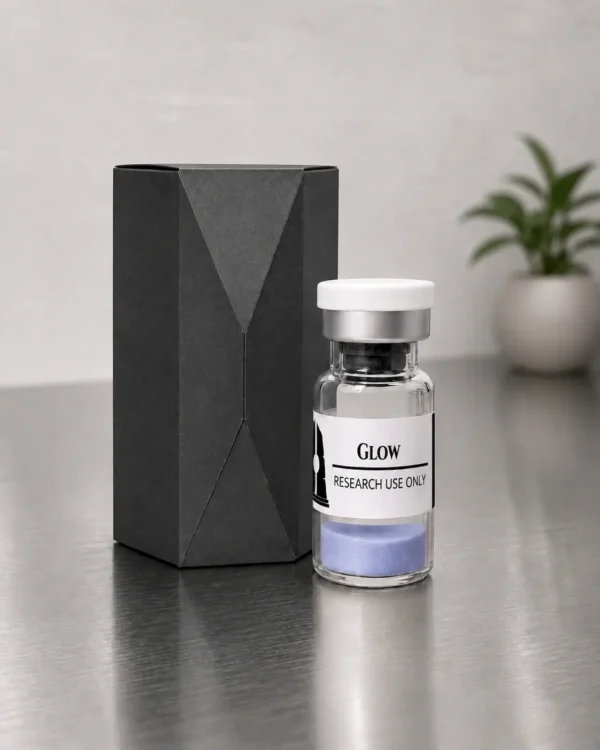
GLOW combines GHK-Cu, BPC-157, and TB-500 to create a broad research platform for tissue remodeling. Each component approaches the process from a different angle: GHK-Cu is closely associated with collagen and extracellular-matrix signaling, BPC-157 with angiogenic and cytoprotective pathways, and TB-500-related research with actin dynamics and cellular migration.
That combination makes GLOW especially relevant for projects involving connective tissue, wound-healing mechanisms, vascular signaling, skin and extracellular-matrix biology, and coordinated repair responses. Rather than studying one isolated pathway, researchers can examine how several regenerative signals may interact within the same formulation.
Included Compounds
- GHK-Cu
- BPC-157
- TB-500
Common Research Areas
⦁ Collagen and extracellular-matrix research
⦁ Angiogenesis and vascular signaling
⦁ Cell migration and wound-healing pathways
⦁ Connective-tissue remodeling
⦁ Multi-pathway regenerative research
Research References
GHK-Cu Research References
Pickart L, Margolina A. “Regenerative and Protective Actions of the GHK-Cu Peptide in the Light of the New Gene Data.” International Journal of Molecular Sciences. 2018;19(5):1303. DOI: 10.3390/ijms19051303. Pickart L. “The human tri-peptide GHK and tissue remodeling.” Wound Repair and Regeneration. 2008;16(6):720-728. DOI: 10.1111/j.1524-475X.2008.00433.x.
BPC-157 Research References
Sikiric P, et al. “Brain-gut axis and pentadecapeptide BPC 157: theoretical and practical implications.” Journal of Neurogastroenterology and Motility. 2016;22(2):235-242. DOI: 10.5056/jnm16018. Hahm KB, et al. “Benefits of BPC-157 in gastric ulcer healing.” Journal of Physiology and Pharmacology. 2010;61(5):551-558.
TB-500-Related Research References (Note: The following citations examine the full-length 43-amino acid Thymosin Beta-4 protein. Material sold under the “TB-500” designation frequently consists of shorter synthetic fragments, such as the LKKTETQ active site. Therefore, findings related to the full-length protein should not be assumed to be equivalent to all synthetic TB-500 fragment variants.)
Philp D, et al. “Thymosin beta 4 promotes hair growth in normal rats and mice.” Journal of Investigative Dermatology. 2004;123(5):845-851. DOI: 10.1111/j.0022-202X.2004.23426.x. Sosne G, et al. “Thymosin beta 4 promotes corneal wound healing.” Experimental Eye Research. 2001;82(4):597-606. DOI: 10.1016/j.exer.2004.10.004.