Product Overview
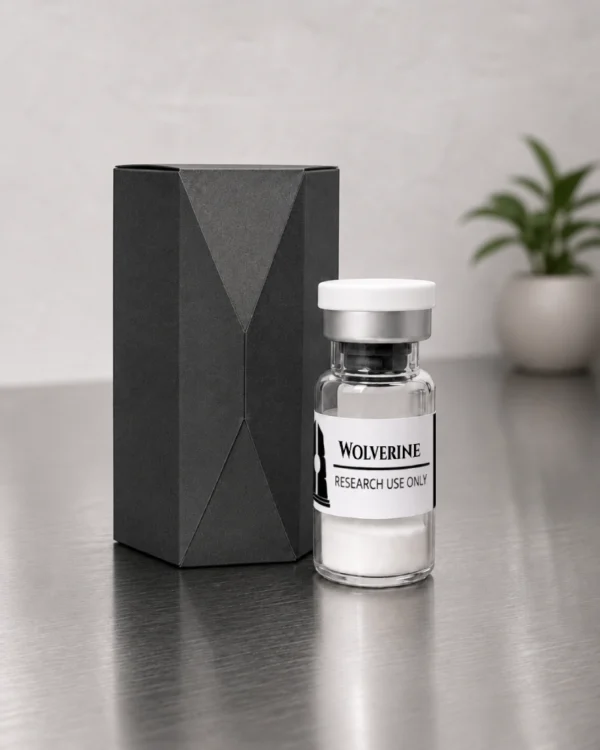
Wolverine combines BPC-157 and TB-500-related material to target complementary parts of the tissue-repair process. BPC-157 is closely associated with angiogenic, cytoprotective, gastrointestinal, and tendon-related research, while TB-500-related studies focus on actin dynamics, cellular migration, and wound-healing mechanisms.
The blend is commonly selected for research involving connective tissue, soft-tissue repair, vascular development, inflammation, recovery signaling, and coordinated cellular regeneration. Its strength is the two-angle approach: BPC-157 supports signaling around protection and vascular response, while TB-500 contributes the movement and remodeling side of repair biology.
Included Compounds
- BPC-157
- TB-500
Common Research Areas
⦁ Angiogenesis and vascular signaling
⦁ Cell migration and actin pathways
⦁ Tendon and connective-tissue models
⦁ Wound-healing mechanisms
⦁ Coordinated repair research
Research References
BPC-157 Research References
- Sikiric P, et al. “Brain-gut axis and pentadecapeptide BPC 157: theoretical and practical implications.” Journal of Neurogastroenterology and Motility. 2016;22(2):235-242. DOI: 10.5056/jnm16018.
- Hahm KB, et al. “Benefits of BPC-157 in gastric ulcer healing.” Journal of Physiology and Pharmacology. 2010;61(5):551-558.
TB-500-Related Research References
- Philp D, et al. “Thymosin beta 4 promotes hair growth in normal rats and mice.” Journal of Investigative Dermatology. 2004;123(5):845-851. DOI: 10.1111/j.0022-202X.2004.23426.x.
- Sosne G, et al. “Thymosin beta 4 promotes corneal wound healing.” Experimental Eye Research. 2001;82(4):597-606. DOI: 10.1016/j.exer.2004.10.004.