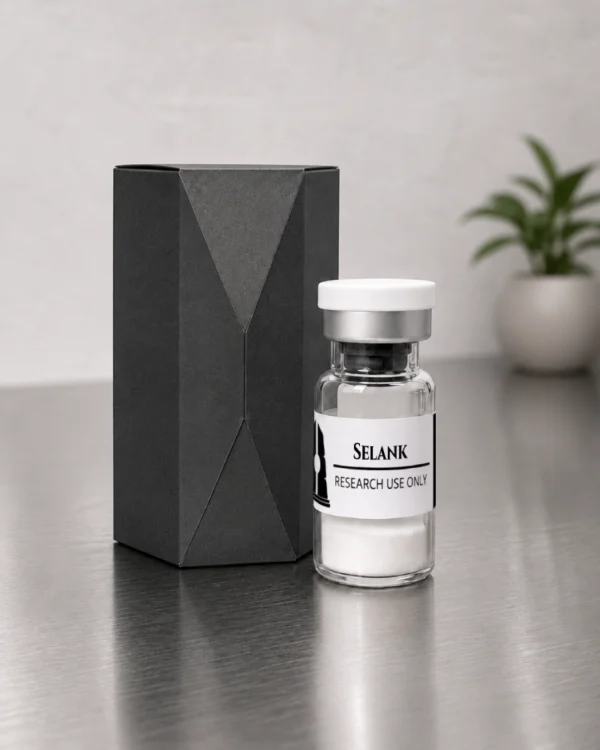
Product Overview
Selank is a synthetic heptapeptide derived from tuftsin, an endogenous immune-related peptide. Its Pro-Gly-Pro extension improves stability and gives researchers a distinctive model for studying the overlap between emotional regulation, cognition, and immune-neuroendocrine communication.
The compound is best known for anxiolytic and nootropic research. Study areas include anxiety-like behavior, stress resilience, memory and learning, enkephalin metabolism, inflammatory gene expression, and neuroimmune signaling. The lack of a strongly sedative research profile is a major reason Selank continues to stand apart from conventional anxiety models.
For projects that need both cognitive and stress-response endpoints, Selank brings those two worlds together in a compact peptide.
Common Research Areas
⦁ Anxiety and stress-response models
⦁ Cognitive performance and memory
⦁ Neuroimmune communication
⦁ Inflammatory gene expression
⦁ Non-sedating anxiolytic research
Research References
- Seredenina SB, et al. “Anxiolytic and nootropic effects of Selank.” Bulletin of Experimental Biology and Medicine. 2006;141(5):570–573. DOI: 10.1007/s10517-006-0232-6.
- Inozemtseva LS, et al. “Effect of Selank on the expression of genes involved in inflammatory processes.” Molecular Genetics, Microbiology and Virology. 2009;24(1):16–20. DOI: 10.3103/S0891416809010030.
- Kolomin TA, et al. “Selank affects the expression of genes involved in neuroinflammation and immune response.” Neurochemical Journal. 2020;14(1):45–51. DOI: 10.1134/S1819716120010086.